



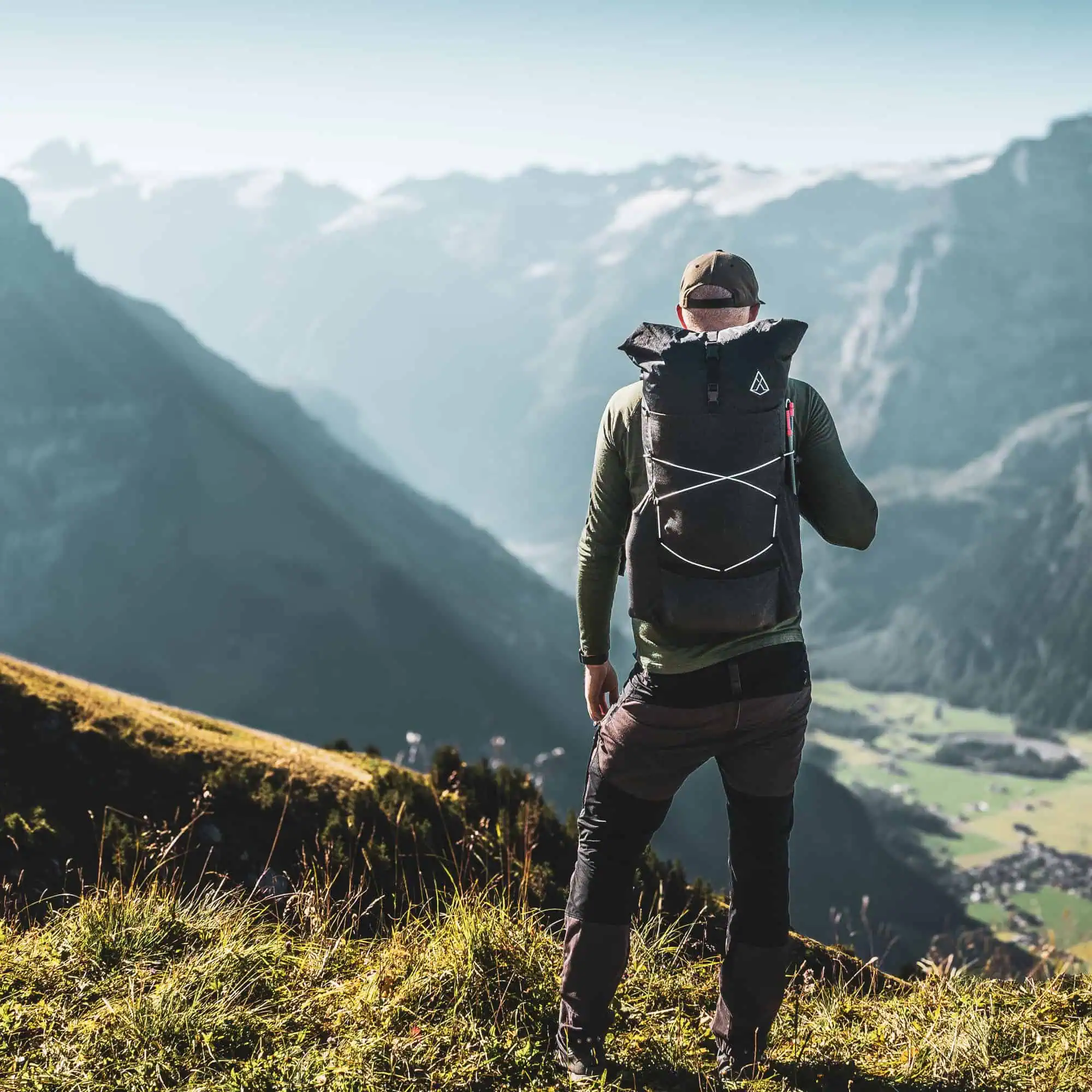
Description
54 liters ideal for thru-hikes, alpine crossings & trekking
from 595 g tare weight
With padded hip belt as standard. Now carries up to 13kg
Unisex model. Fits women & men
6 outer pockets - incl. quick-access pocket
Back padding provides stability & structure
Main material made from 100% recycled polyester
100% fairly produced in Germany
FEATURES
Features of the ultralight backpack
- Total volume of around 54 liters (including all outer pockets)
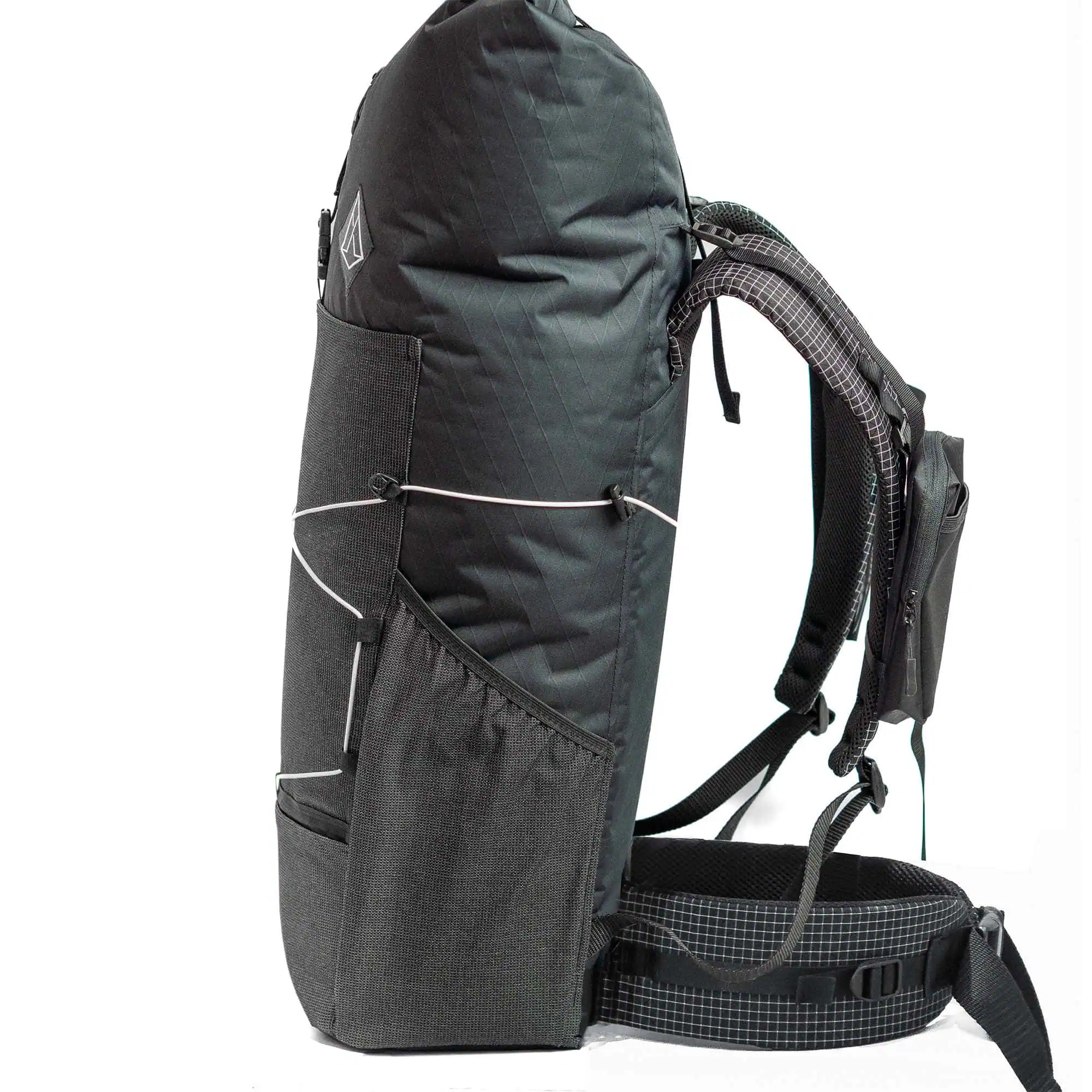
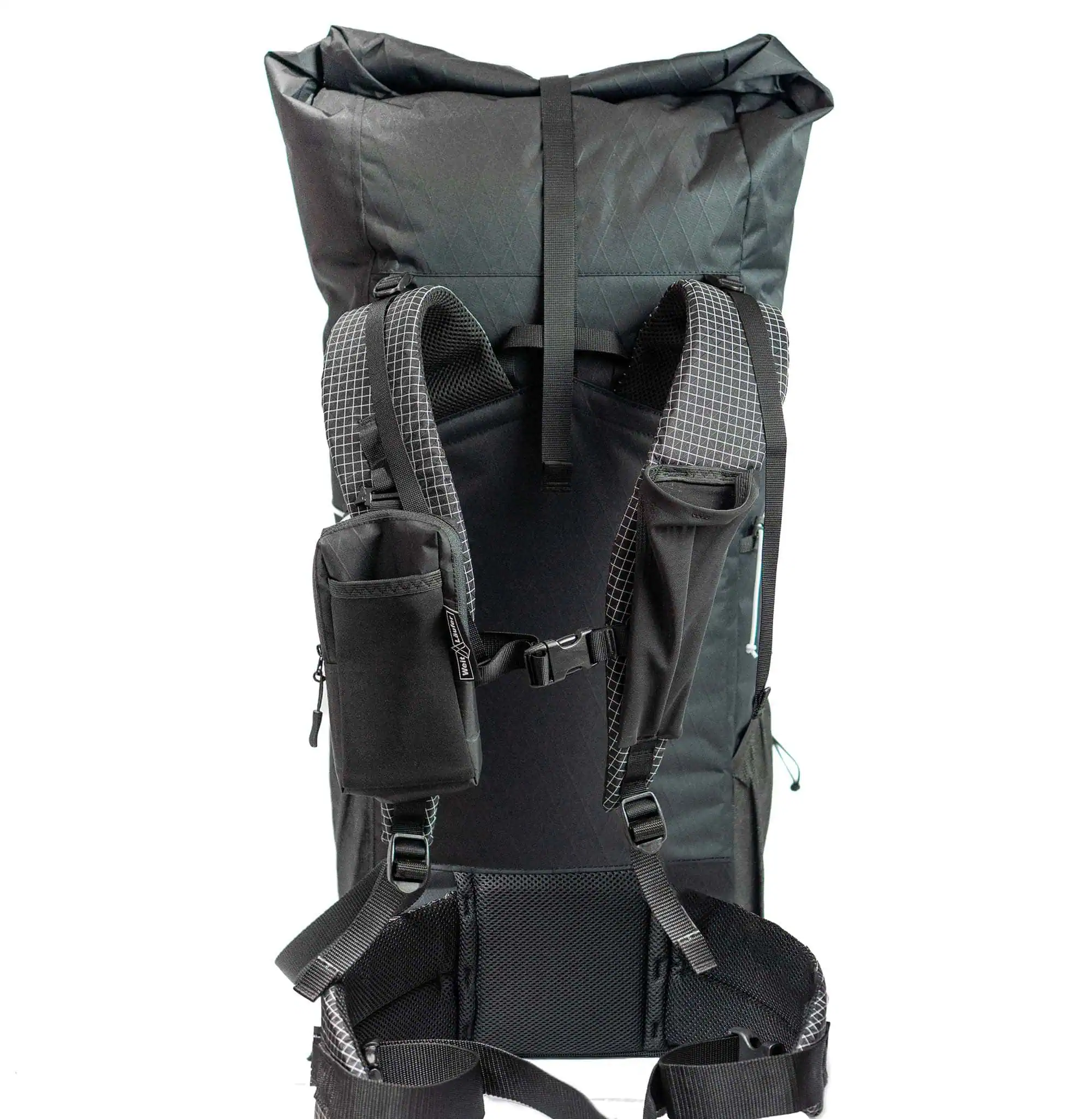
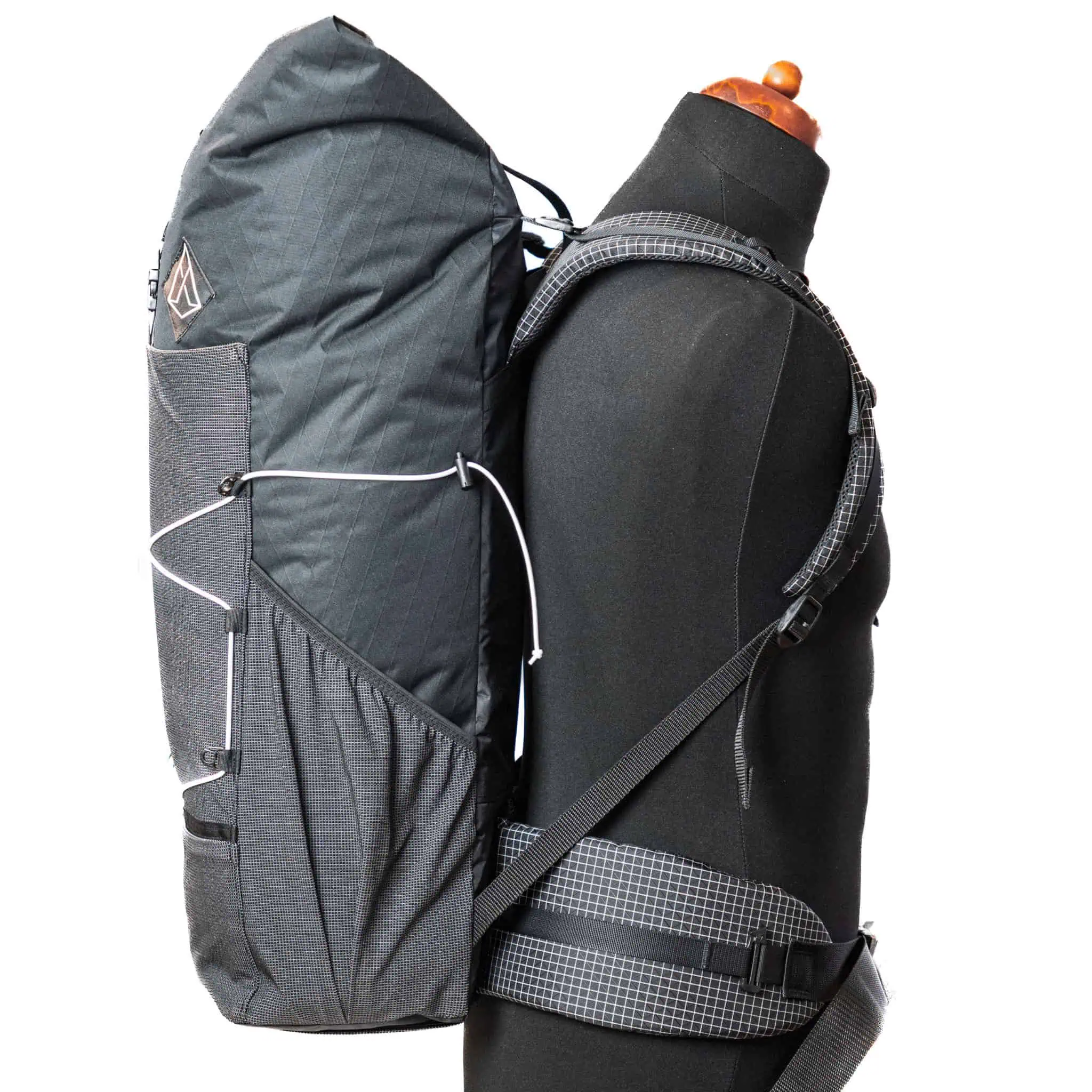
- Comfortable carrying system: Thickly padded, tear-resistant unisex S-shaped shoulder straps with load lifters; removable back padding for stability
- Easily accessible pockets: Large elastic side pockets, elastic shoulder pocket, slip pocket under the front pocket, bottom pocket
- Resistant & water-repellent thanks to high-quality, waterproof materials
- X-PAC VX21: proven high-end laminate - highly abrasion-resistant, weatherproof and dimensionally stable.
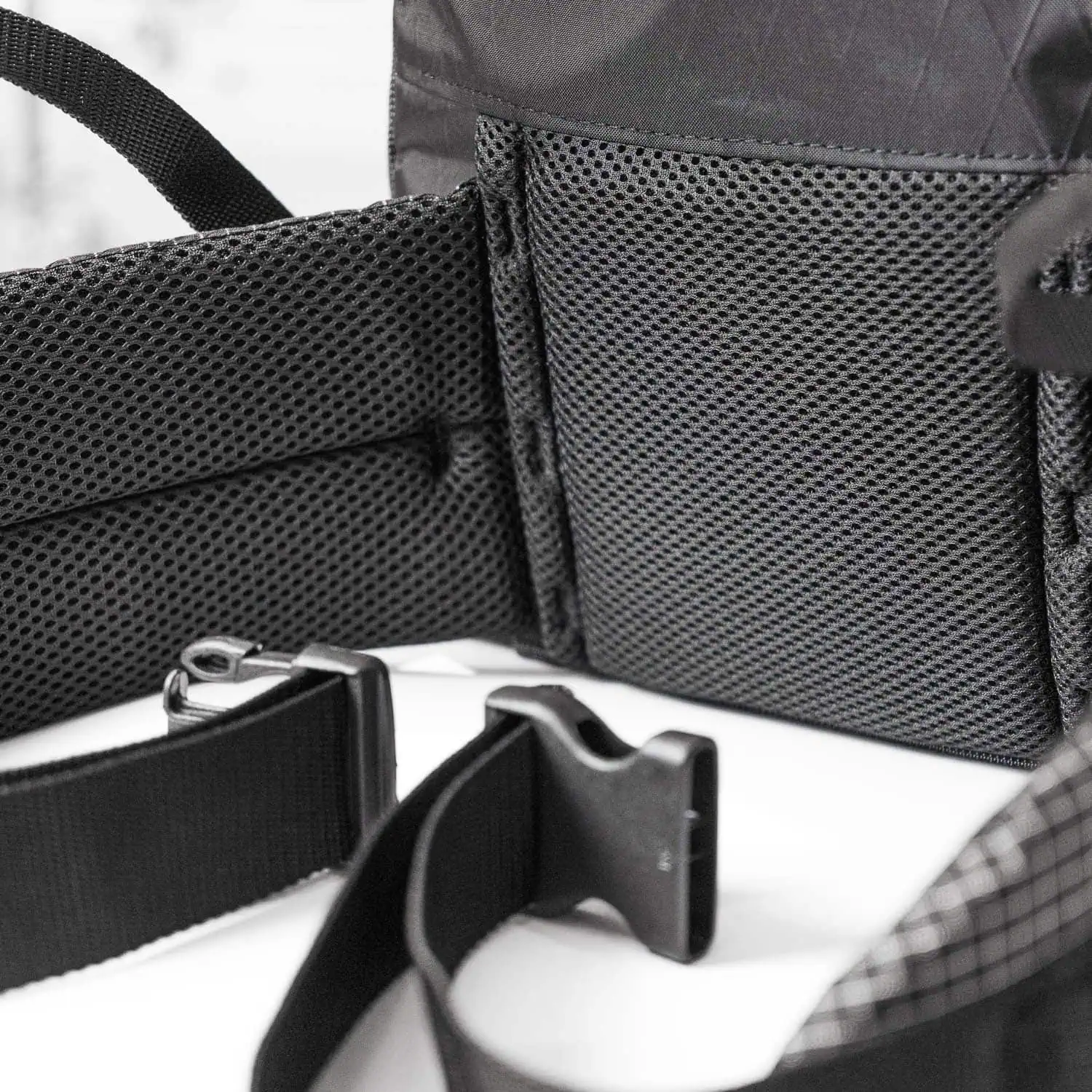
- Padded hip belt for even more comfort
- Recommended maximum load: 13 kg
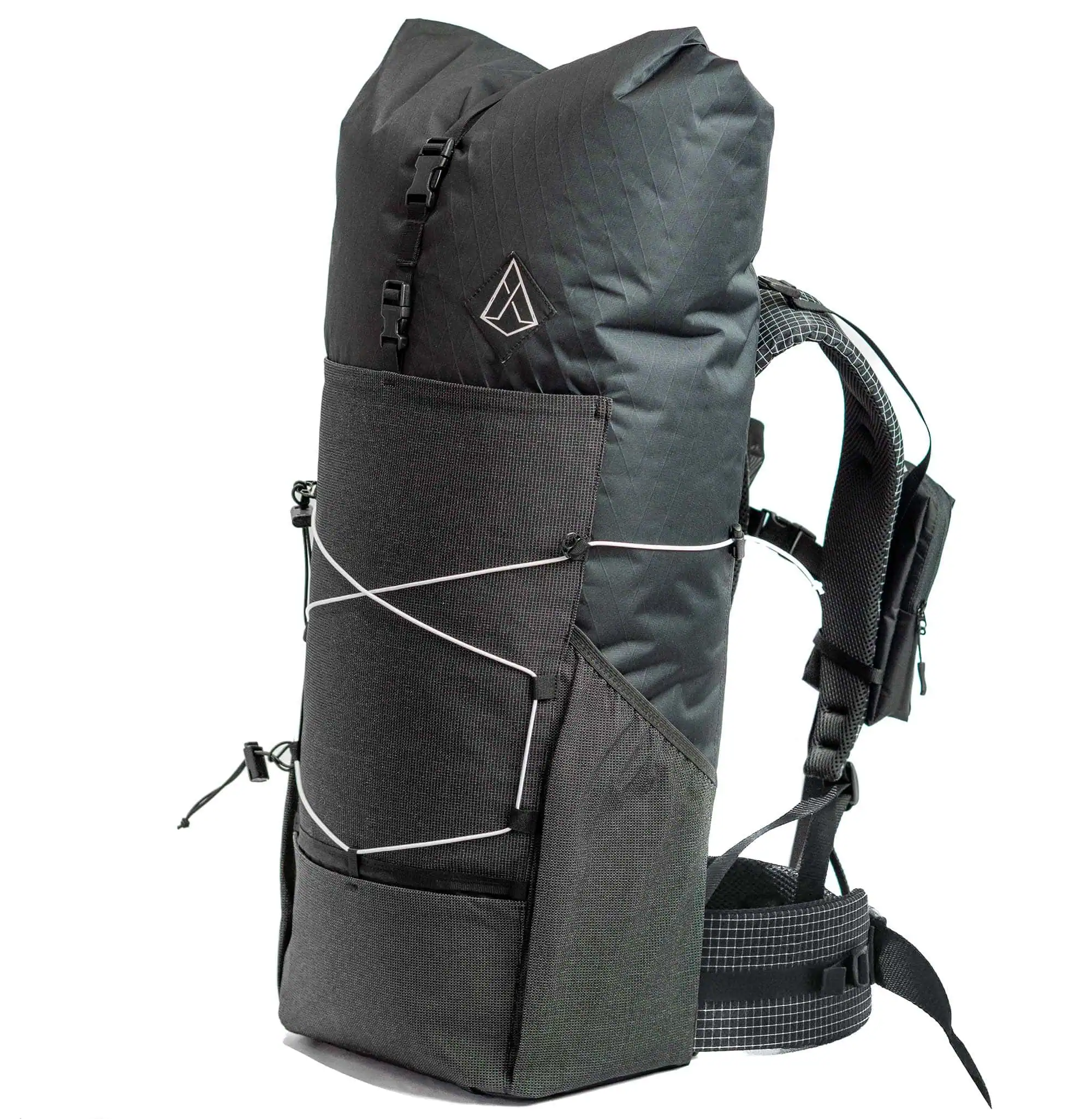
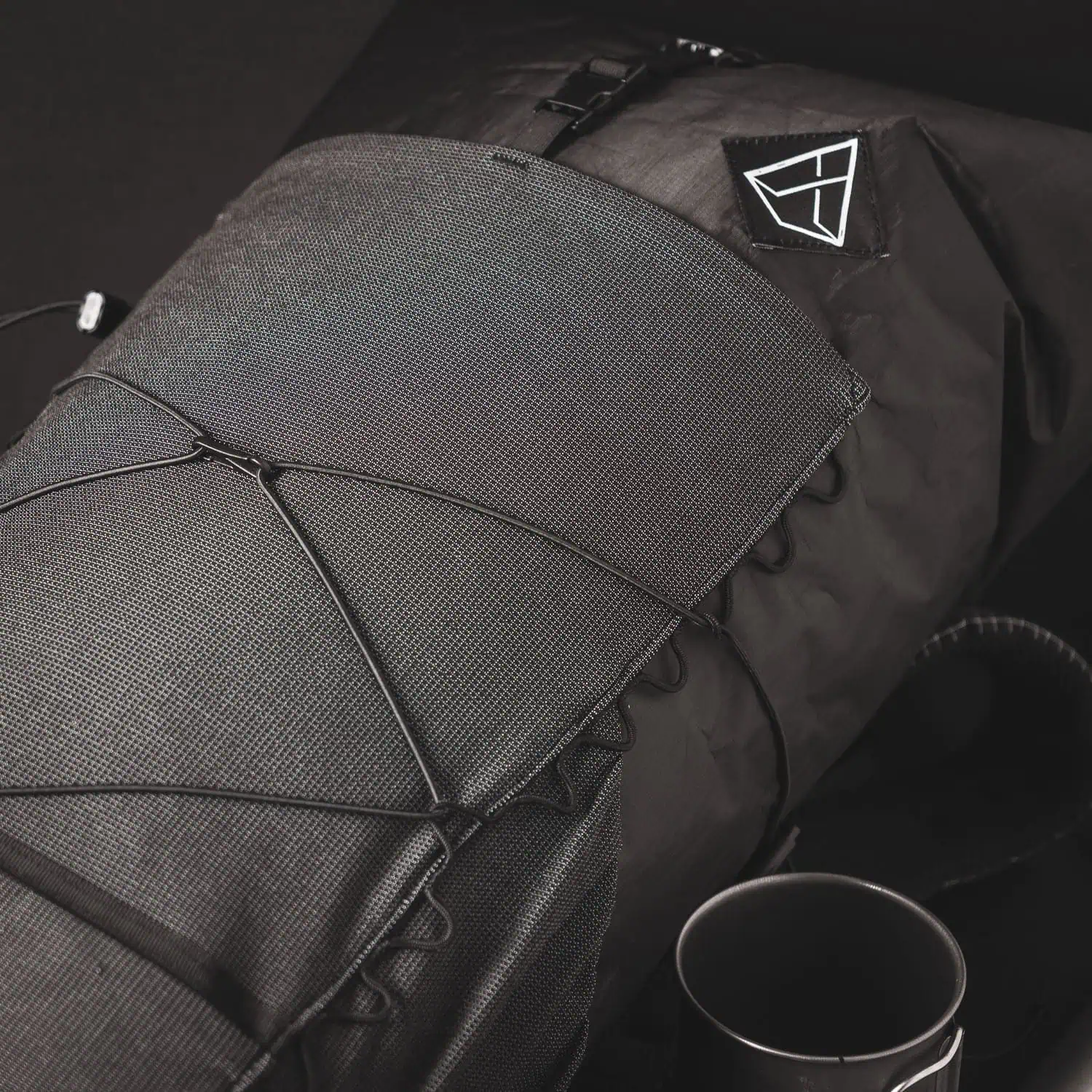
- Very large & tear-resistant front pocket with buckle for fastening
- Adjustable, firmly sewn chest strap (20 mm webbing)
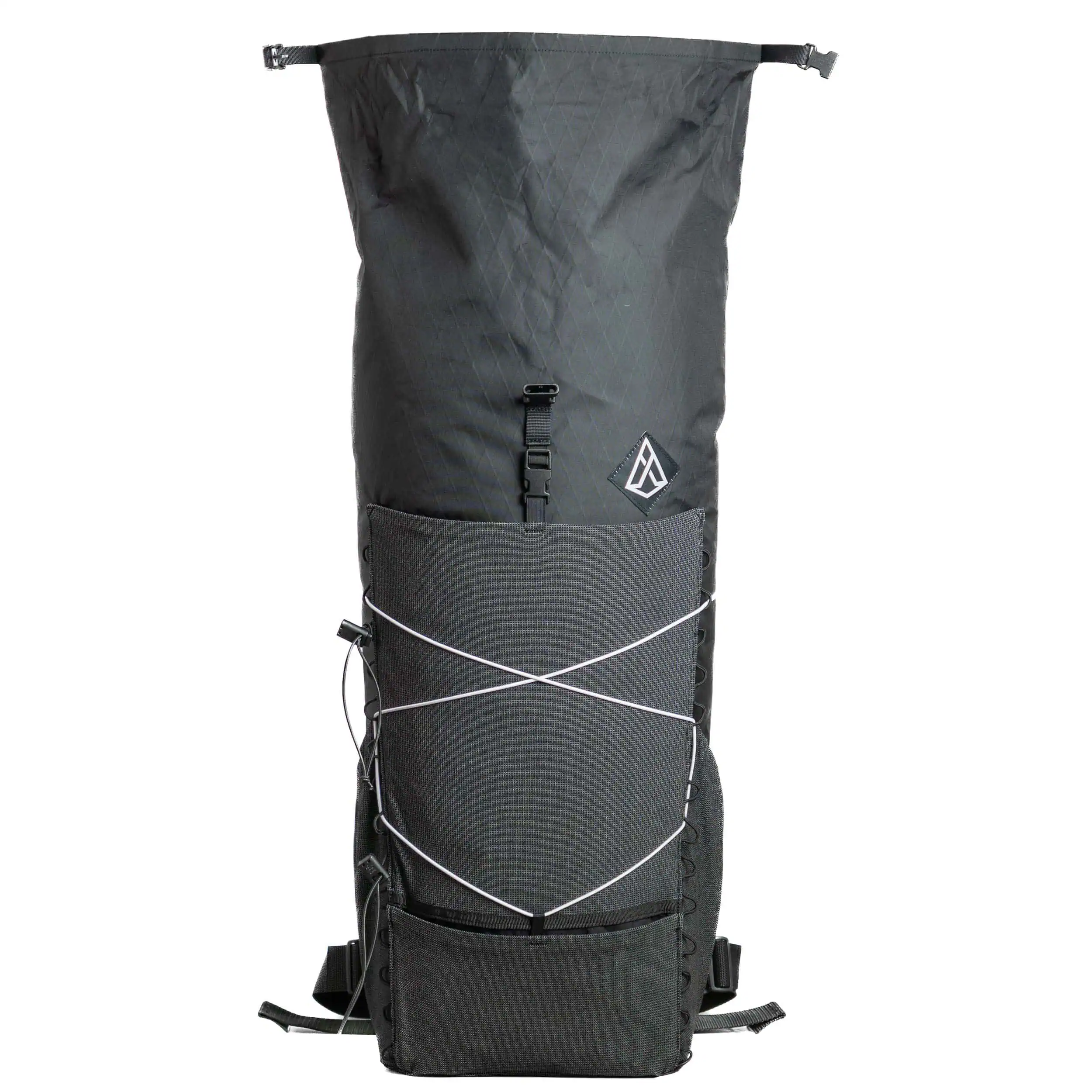
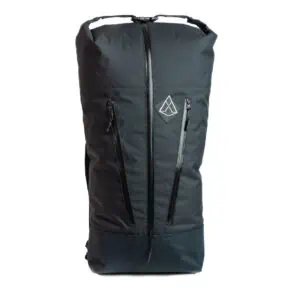
- rolltop closure
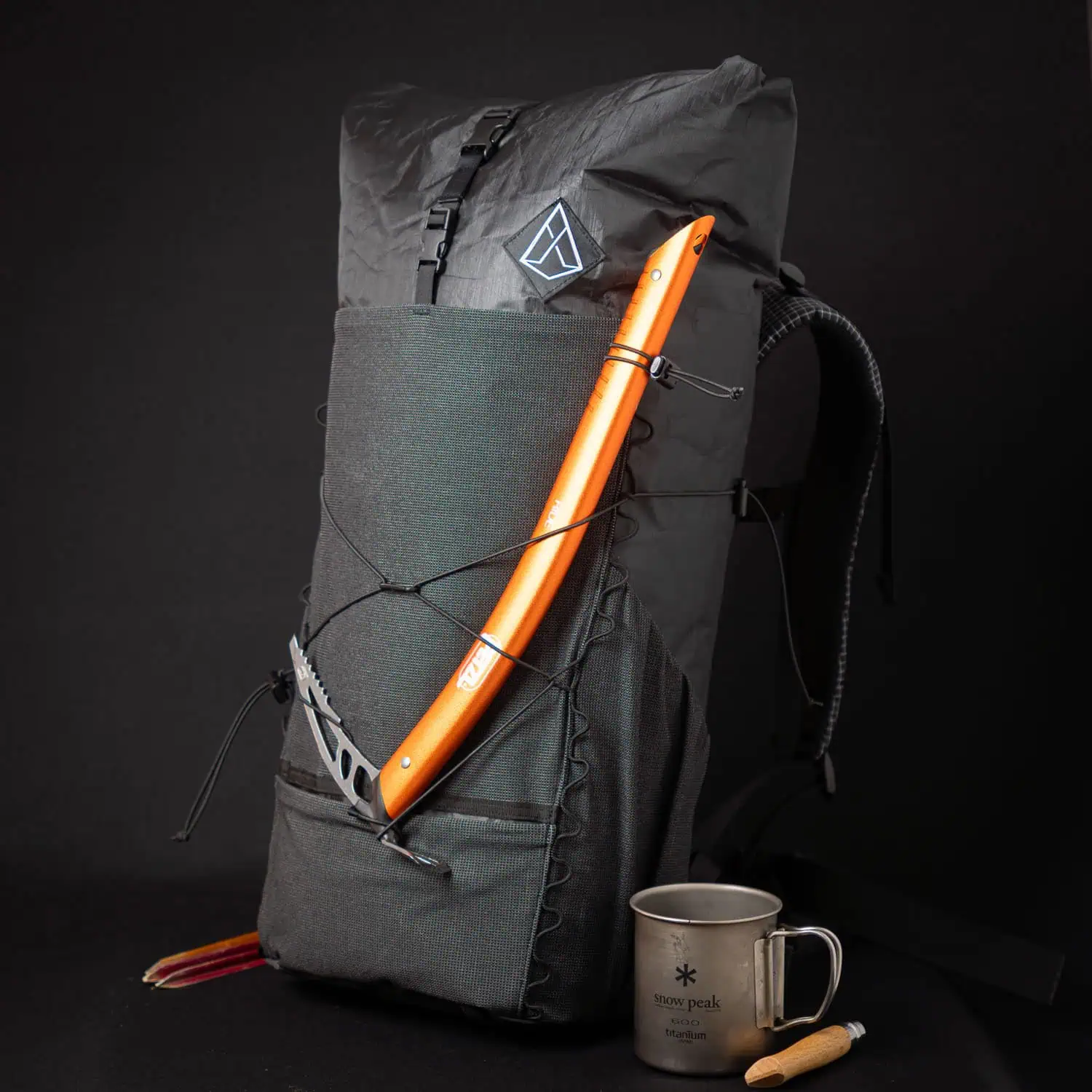
- Side compression straps & elastic cords over the front pocket
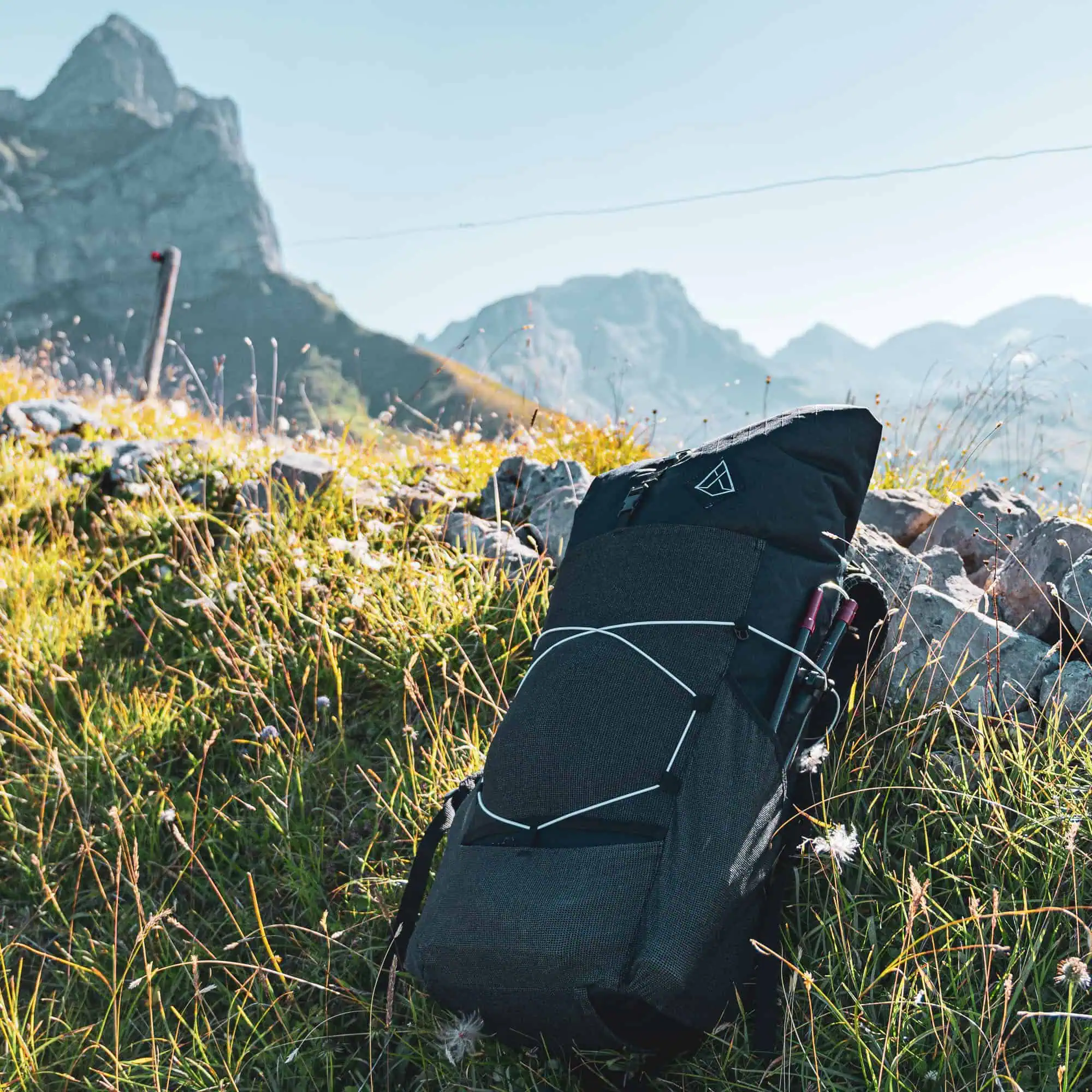
- Cord loops for trekking poles of any length
- Robust polyamide & polypropylene straps prevent slipping in wet conditions
- Scope of delivery: Agilist 2025, 2 elastic cords for trekking poles, 1 compression cord in white
- Zippered shoulder and waist belt pockets optionally available
SPECS & MATERIAL
specifications
Volume:
Weight:
incl. padded hip belt
Note: As these are handmade individual pieces, the weights may vary slightly.
Other:
material
side pockets
You can find more information about the materials used in the ultralight backpack in the WeitLäufer material dictionary.
Note: Even though a combination of ultralight and durable materials has been chosen, this is still an ultralight backpack. Careful and careful handling will increase its lifespan considerably.
UX10 vs. VX21 - what makes the difference?
The UX10 material is characterized by its extremely low weight and high tear resistance. It weighs just 85 g/m² and is made from ultra-PE fibers that are as robust as Dyneema. This means that it is lightweight yet very durable - ideal for ultralight backpacks where every gram counts.
In comparison, VX21 offers slightly higher abrasion resistance and weighs 210 g/m². Both materials are waterproof and UV-resistant, but UX10 is particularly suitable for tours where maximum weight saving is a priority.
Unfortunately, the UX10 material is currently sold out.
DESCRIPTION
details
the Ultralight Backpack
A new feature is the reintroduction of the elastic insert pocket, which was often missing on the 2023 model. It can be accessed with the backpack attached and offers space for gloves, headlamp, water filter, snacks, sunglasses, etc. Elastic, accessible from the top and secured with a cord to prevent things from falling out.
The elastic and large front pocket is suitable for a rain jacket, fleece jacket, provisions, head torch, water filter, etc.. This makes it easy to get to all the things you want to reach quickly while hiking. It is also made from the same hard-wearing Ultra Stretch as all the outer pockets on the front and is therefore particularly durable. The elastic cord that runs across the front pocket makes it easy to dry wet clothing such as socks or T-shirts.
The elasticated bottom pocket with a large opening for the right hand is a practical feature. There is room for snacks, gloves or even an ultra-light rain skirt. There is another small opening on the left-hand side of the bottom pocket to quickly stow a snack pack or a handkerchief.
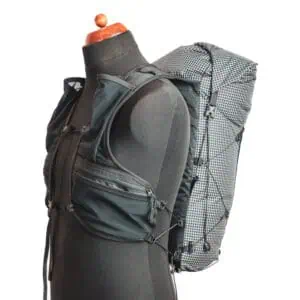
The elastic shoulder strap pocket offers space for a smartphone, snacks or a 0.5 L water bottle. This time it is made from very elastic 4-way stretch. The shoulder bag is located on the left-hand side and therefore offers access for the right hand. A shoulder bag with a zipper for the right side can be ordered as an option.
Both side pockets have deep access points to quickly grab a water bottle if the climb has been particularly sweaty. They are also made of elastic Ultra Stretch and offer space for two 1-liter water bottles each as well as gloves, glasses case, etc. With a total volume of around 54 liters, the Agilist is just as suitable for multi-day hikes with light packs as it is for trekking tours lasting several months, Alpine crossings or thru-hikes. The Agilist is closed with a roll closure. This means that the volume of the main compartment can be varied and the ultralight backpack can also be adapted to a smaller load. New: The padded hip belt is now standard; this improves load transfer and increases the maximum payload to 13 kg.
The inner pocket of the Agilist has a PE foam padding that gives the rucksack stability and structure. The padding can also be used as a supplement to a short sleeping mat. Nevertheless, the rucksack should be packed compactly and fully in order to achieve maximum carrying comfort! With ultralight luggage, this padding is not absolutely necessary and can therefore be easily removed.
REVIEWS
I got to know and love the Endurist on my 920 km long-distance hike from Zurich to Nice ❤️! My basic weight (self-sufficient, incl. solar panel and power bank) is 5.2 kg. With food for 4 days and 4 liters of water, it had to carry a maximum of 15 kg. The comfort was first class 🤩. The hip belt was useful for varying the load. I also ordered chest and hip bags, which I can recommend without reservation. I strapped the tent to the bottom so that it could also be taken along when wet. The Powerbox was in the waste compartment on the ground and could be connected to the 18w solar panel through the strapped tent and charged during the hike. The only small flaw was that the hip straps were much too long when the tent was delivered. I had to shorten them, which meant that the seams at the ends were lost. I would like to see a corresponding configuration option when ordering, e.g. by specifying the hip circumference. But that's complaining at the highest level! 😊
Verified purchase
I've had the Agilist version 2025 since June and have just come home from a 260 km hike through the Vosges mountains. I've had the small model from Weitläufer for a few years now. The approx. 25-30 l rucksack has been my reliable companion on day hikes and weekend excursions. Now I wanted to replace my 38l backpack with a carrying system with a UL backpack and I am really impressed.
My basic weight is around 7 kg, plusfood for up to 3 days and water, 5 liters on one stage. I chose the normal hip belt and the weight was no problem. I am 168 cm tall, 62 kg and opted for size M. The rucksack fits perfectly and puts less weight on my shoulders than my old rucksack. The backpack was never really full, so I was always able to pack with ease. At my request, 2 expansion pleats were sewn into the large front pocket. This bag is now a real space miracle and holds everything I need to have to hand during the day. The side pockets can hold either 2 liters of water or 1 liter of water plus tent poles/pegs.
My first aid kit was in the small front pocket. I also ordered a Y-belt instead of the single belt at the top. It holds everything bombproof, wet clothes, 1.5 l water bottle, baguette, simply everything.
My 600 ml water bottle fits perfectly in the shoulder strap pocket on the left and is therefore always to hand. My hiking poles were firmly secured on the train journey with the tips in the small loops and under the elastic strap.
All in all, there is nothing that bothers me or that I would change.
I am delighted to be able to call another high-quality rucksack from the Weitläufer my own and I am looking forward to many relaxed hiking kilometers.
The customer service is MEGA 🤩
Verified purchase
I first wore the Agilist (model 2023) on the cross-country trail (Konstanz-Freiburg, 180 km) and most recently for two months and 1000 km on the Bibbulmun track in Western Australia. It has become my favorite piece of equipment and impresses with the fact that every detail is well thought out and fits, and there is nothing to complain about. An eye-catcher even on the other side of the world and enviously admired by hikers from all over the world.
Verified purchase
I have now traveled about 1,500 km and 50,000 meters in altitude with the Agilist, model 2022, including 800 km in one go on the GR 11 in the Pyrenees. During this time it was loaded with approx. 6.5-12 kg. I carried it without a hip belt. And although I'm more of a classic rucksack person (with hip belt, elaborate carrying system, thousands of adjustment options): It fitted me perfectly. I didn't miss a single feature. Nothing was superfluous. And also: the thing looks like new - even after contact with prickly undergrowth, rocks and scree!
Verified purchase
Now that I've had my Agilist for a week and have packed the rucksack in several configurations and been able to try it out on a day trip, I'd like to share my first impressions with you.
1. in general
Even if this is not really important for the intended use, it is still not unimportant to me how a backpack looks. The Agilist is simply a gem. Everything is in the right place, thecolors are subtle, the lines and proportions are balanced and simply harmonious. I fell in love with it straight away 🙂 For me, it doesn't have a single unnecessary buckle or other thing that could be left out (except for the hip belt, but more on that later). Someone has really put a lot of thought into this, you can see and feel it in the many details and sensible solutions.
2. size
I used to have a 30-liter rucksack (including all the outer pockets), which I was actually happy with in the summer configuration (light sleeping bag, fewer changes of clothes). What bothered me, however, was that I had to compress all my equipment extremely and could only attach my tent to the outside. This meant I could only take one large water bottle with me and there wasn't enough space for food for several days. Nevertheless, 54 liters is significantly more than 30 liters. My initial concerns about changing from 30 to 54 liters and then not knowing how I would fill the backpack (with the same previous equipment) were dispelled immediately with the first pack. Whereas I previously had to "stuff" all the outer pockets of my old rucksack, 90 percent of my equipment, including food for a few days, now fits in the main compartment. The remaining 10 percent would also fit inside, but I would like to stow it outside (rain gear, spirit, pegs, snacks, etc.). In addition, I can now get my equipment into the main compartment rather easily without extreme compression and the rucksack can still be fully loaded for good carrying comfort. I can now even fit my tent (Tarptent Aeon Li) vertically in the main compartment and use the two side pockets for water. Mega!
3. wearing comfort
So that you can compare with your own equipment if necessary: Depending on the time of year, my basic weight is between 4 and 4.5 kg. With 2 liters of water, some alcohol and food for about 3 days, I end up with a total weight of about 7-8 kg. For me, this weight is still manageable with the Agilist without a hip belt. That's why I removed the hip belt. But everyone has to decide for themselves. In any case, it's great that the hip belt can be easily removed. The shoulder straps are very well padded and connect very well to the chest strap. The load control straps are also easy to find while walking and are then easy to adjust. Everything fits perfectly, nothing pinches, rubs or feels uncomfortable. With a height of 179 cm, the size M fits me perfectly. At my request, the Agilist has a drawstring at the back for a sleeping pad. In combination with a sleeping pad, it is even more comfortable. I was therefore able to remove the padding on the inside. But here too, everyone has to decide for themselves whether they prefer the inner or outer padding. Another advantage of using a sleeping pad as a back pad is that the rucksack does not come into direct contact with body sweat and therefore (hopefully) lasts longer or stays fresh for longer 🙂
4. processing
I have never had a rucksack that was so well made. All the seams are top quality and reinforced in the right places. The choice of materials is very good. Everything feels high-quality and robust, even though the Agilist weighs so little. I haven't found anything where I think: Well, it could be done better 🙂
5. equipment
You can find a detailed description of the equipment on the homepage, so here is just how I use or expect to use the Agilist. My (almost) complete equipment including food fits in the main compartment. The large outer pocket is big enough for a rain jacket, rain skirt, umbrella, spirit and pegs. In the lower pocket I have a first aid and repair kit and a pocket knife. I then put water and my small shovel in the side pockets. I'm still looking for a good idea for the pocket on the bottom of the rucksack. But I'm sure I'll think of something else. The left shoulder pocket holds a 0.5 liter water bottle, which fits in very well. My smartphone fits perfectly into the optional right shoulder bag, including the protective case (iPhone 15 Pro Max). I don't use the hip belt pockets, which can also be ordered as an option, as I have removed the hip belt. Instead, I like to use a separate hip bag (Fanny Pack). I've already mentioned the drawstring on the back. Mega practical!
6. conclusion
I'm looking forward to the first longer tour in the fall and will then be able to expand and refine my packing with the Agilist. I'm hoping for at least one rainy day so that I can test the rain properties. As I've been using an inner liner so far anyway, I'm not so worried about that. But who knows, maybe I can even do without the liner in the future. The Agilist is definitely my new favorite backpack and I would like to thank you once again for putting so much heart and soul into this great piece of equipment.
Verified purchase
Share your experience with the AGILIST!
Questions & Answers
Ultralight backpack
An ultralight backpack is a minimalist trekking backpack that differs from conventional backpacks primarily due to its extremely low weight and reduction to the essentials. While conventional backpacks often have complex carrying systems, thick padding and lots of inner pockets, these features are largely reduced or completely omitted in ultralight backpacks. The focus is on keeping the overall weight of the backpack as low as possible to make carrying it over long distances more comfortable. Despite their lower weight, ultralight backpacks still have the basic functions of a trekking backpack: a large main compartment, external pockets and padded shoulder straps. However, the absence of heavy carrying frames and superfluous padding saves a considerable amount of weight without compromising carrying comfort. Ultralight backpacks often weigh less than 500 grams, compared to the 2 to 3 kilograms of conventional models. Ultralight rucksacks can be used in a variety of ways: they are ideal for multi-day trekking tours, Alpine crossings or thru-hikes where lightweight luggage is crucial. They are also an excellent choice for pilgrimages such as the Way of St. James. As luggage is often reduced to the bare essentials on pilgrimages and no tent equipment needs to be transported, an ultralight backpack offers sufficient volume and flexibility. Carrying a lightweight backpack over long distances takes the strain off the body and makes pilgrimages even more enjoyable. The ultralight backpack is also an ideal companion for hut tours. As less bulky items are usually required on such tours and sleeping bags or tents are not part of the luggage, the equipment fits perfectly into the smaller, lighter backpacks. With the right packing method, the volume can be used optimally and the rucksack offers the necessary comfort for multi-day hikes. Thanks to the lightweight materials used, such as X-Pac or Dyneema, ultralight backpacks are nevertheless very resistant and are in no way inferior to classic trekking backpacks in terms of durability. More information about Ultralight Backpacks can be found in this detailed article.
What exactly is an ultra light backpack?
Ultralight backpacks rarely have a carrying system. This is because the contents give the backpack the necessary stability. It is therefore important to pack ultralight backpacks compactly and fully! These backpacks do not achieve their optimum carrying comfort when half full. However, to give the WeitLäufer backpacks a lightweight structure even with less content, the inner pocket of the Agilist has a stiffener in the form of removable foam padding. This ensures that the weight is better transferred to the hip belt and the contents are cushioned. For hikers who don't want to do without a carrying system but are still looking for a lightweight backpack, there is now the WeitLäufer Endurist. This lightweight trekking backpack combines the lightness of an ultralight backpack with a stable carrying system for added comfort. The carrying system of the Endurist consists of an aluminum profile and a plastic plate, which together provide stability and can comfortably carry loads of up to 18 kg. Despite this robust construction, the Endurist remains an extremely lightweight backpack, weighing in at just 880 g. This makes it the perfect solution for hikers who want to combine high loads with the comfort of a lightweight backpack. Here you can find the Endurist.
Does the agilist have a frame system?
The recommended maximum carrying weight of the backpack is about 12 kilograms. More weight is in an ultralight backpack over time simply no longer comfortable to wear. The basic weight of your equipment is therefore ideally around 5 kg. You can find an ultralight trekking packing list here . Nevertheless, after a resupply, larger loads can be carried for a short time. Structurally, the backpack can withstand loads of well over 15 kg. But whether the weight is then still comfortable to carry over longer distances, is an individual question.
Up to how many kg can I load the Agilist?
To ensure that a backpack fits well, they are often offered in different back lengths. These vary from person to person. The back length is measured as the distance between the 7th cervical vertebra and the upper edge of the pelvic bone. You can easily determine this distance with a tape measure. But how do you find these two points? If you rest your chin on your chest, the 7th cervical vertebra is the one that sticks out the furthest. You can easily feel it with your hand. You can find the upper edge of your pelvic bone by placing your hands on your hips with your thumbs pointing towards your spine. The iliac crest is located between your thumbs and marks the lower point of the length of your back. Ideally, a second person should help you determine and measure your back length. As soon as you have determined your back length, you can find the right backpack size for the WeitLäufer backpacks in the following size table: Another way to find the right backpack size is to use your height. Although these values are not as precise as the back length, they give a good indication of the length that is most likely to fit you.
Determine back length for backpacks
Size chart
Back length
Backpack size
40 - 43 cm
Small
43 - 53 cm
Medium
53 - 59 cm
Large
Body size
Backpack size
up to 168 cm
Small
168 - 188 cm
Medium
188 - 200 cm
Large
Although we do not offer an official warranty on our backpacks, we stand behind the high quality and durability of our products. If your backpack shows signs of wear or minor damage after some time and use, we are happy to offer our support in repairing it. Our aim is to restore your backpack to perfect condition so that it can continue to serve you faithfully. We know that a rucksack is subject to a lot of wear and tear during intensive adventures. That's why we use robust, hard-wearing materials and attach particular importance to careful workmanship. Even if signs of wear and tear occur in rare cases, we do everything we can to make the backpack fit for use again. Your confidence in our product and your satisfaction are particularly important to us, which is why we strive to find a suitable solution for every problem. This way, your backpack will remain a reliable companion on future tours!
Is there a guarantee for the WeitLäufer backpacks?
Of course, you can try on the Agilist in the comfort of your own home. We will send you the backpack so that you can try it on and test it at your leisure. If you find that it does not meet your expectations, you can easily return it within 14 days. Please make sure that the rucksack is only tested at home and is not used on a hike so that it can be returned in perfect condition.
Can I try on the Agilist and return it?
It is quite normal to start sweating on your back after a certain amount of time and intensity when hiking with a backpack. When designing the Agilist, we deliberately decided against a ventilated back section, as this runs counter to the minimalist basic idea of our ultra-light equipment and we want to keep the backpack as light as possible. In addition, in our experience, in warm temperatures and on strenuous hikes, you also start to sweat under a ventilated back section at some point. That's why we opted for the current contact back construction. Personally, I don't mind sweating on my back while hiking. However, I try to place the back of the rucksack in the sun during breaks to dry out the moisture.
Why doesn't the Agilist have a ventilated back section?
A common prejudice regarding ultralight backpacks is the seemingly limited wearing comfort. However, this prejudice can be quickly refuted, because the wearing comfort of a backpack always depends on the correct packing method. This is even more noticeable with an ultralight backpack compared to a conventional trekking backpack. If you follow these packing tips, you'll find that your ultralight backpack is extremely comfortable to carry on your shoulders: In this way, even an ultralight backpack will be extremely comfortable to wear, even for long periods of time and long distances. In addition, many models of ultralight backpacks, despite their light weight, have thickly padded shoulder straps that can easily withstand heavier loads.
How do I pack an ultralight backpack?
The dimensions of the Agilist are 55 x 28 x 17 cm. These dimensions are within the hand luggage guidelines of many airlines, which often allow a maximum size of 55 x 40 x 20 cm. With its slim depth of just 17 cm, the Agilist usually remains below the permitted limits even when fully loaded. This means that in most cases the Agilist could pass as hand luggage as long as it is not packed too full and does not exceed the height of 55 cm. However, remember that each airline has its own regulations. It's always a good idea to check your airline's guidelines in advance, especially when it comes to weight. But in most cases, with the Agilist you are well equipped to travel light and flexible.
Can the WeitLäufer Agilist be carried as hand luggage on an airplane?
Yes, the Agilist is supplied as standard with a robust hip belt made of 40 mm wide polypropylene webbing, which is slip-resistant even in wet conditions and prevents constant re-tensioning. We also offer an optional padded hip belt (medium), which weighs approx. 150 g and is available in different sizes - with a maximum hip belt circumference of 142 cm (S), 152 cm (M) or 162 cm (L). This allows you to choose the optimum carrying comfort and stability to suit your needs.
Does the Agilist have a waist belt?
Although the body of the Agilist is made of waterproof and robust X-Pac RX15 3-layer laminate as standard, it can still not be called completely waterproof. Because by sewing, small holes are poked into the material. In several hours of rain, water can thus get through these holes inside. Since sealing is too time-consuming and costly, it is not done. Nevertheless, the Agilist withstands rain and water better than most other hiking backpacks. Thus, the high-quality X-Pac material protects well against rain and moisture. But the X-Pac backpack is still not 100% waterproof. To fully waterproof the contents, the use of a backpack liner or dry bags is recommended.
Is the agilist waterproof?
Compact cameras can be securely stowed in the optional shoulder or waist belt pockets. These are designed to fit cameras the size of a Sony RX100 without any problems. Most current smartphones also fit in these pockets. Larger cameras such as system or DSLR cameras are easiest to attach to the hip belt using a special camera bag. However, this requires at least 40mm wide loops on the respective camera bag. Alternatively, the CaptureClip from PeakDesign fit easily on both shoulder straps. This is the most comfortable way to attach a DSLR or system camera.
Where can I put my camera on the Agilist

The backpack does not have any hip belt pockets ex works. However, ultralight belt pockets can be ordered, which can be slid onto the 40 mm wide hip belt and fixed in place. You can find information about the hip belt pockets here.
Does the Agilist have hip belt pockets?

Reviews
There are no reviews yet.